Recycling and Sustainability in Landscaping Ealing
 Landscaping Ealing is built around a simple idea: beautiful outdoor spaces should not create unnecessary waste. From garden clearances and turf replacements to planting projects and hard landscaping, every stage of work can be planned with recycling and sustainability in mind. A Landscaping Ealing approach now places resource recovery at the centre of operations, helping to reduce landfill use, lower emissions, and support cleaner local environments. The aim is not only to dispose of materials responsibly, but also to find better uses for them wherever possible.
One of the clearest goals in our sustainability programme is a recycling percentage target of 90% for non-hazardous waste generated through landscaping activities. That means the majority of soil, green waste, timber offcuts, rubble, metal, cardboard, and packaging is directed away from general waste streams and into recycling or reuse routes. For landscaping in Ealing, this target is more than a number: it provides a measurable standard for how jobs are planned, sorted, and finished. Using a targeted approach also encourages better site organisation, cleaner segregation, and fewer mixed loads that are harder to recycle.
 The borough’s wider waste culture supports this effort. Across local neighbourhoods, household and commercial waste separation has become increasingly important, with attention paid to keeping food waste, dry mixed recycling, garden waste, and residual waste in the right channels. That same principle applies to Ealing landscaping projects, where materials are sorted on site so that organic matter can go to composting facilities, stone and brick can be separated for crushing or reuse, and uncontaminated timber can enter appropriate recovery streams. It is a practical way to align landscape work with local environmental expectations.
Local transfer stations are also a key part of the process. Landscaping Ealing uses authorised transfer stations in and around West London to consolidate materials efficiently before they move on to specialist processors. These facilities help manage bulky green waste, soil, mixed construction materials, and recyclable metals in a controlled way. Choosing nearby transfer points reduces journey distances and supports faster sorting, which makes the whole recycling chain more efficient. For a landscaper in Ealing, access to the right station can make the difference between simple recovery and unnecessary disposal.
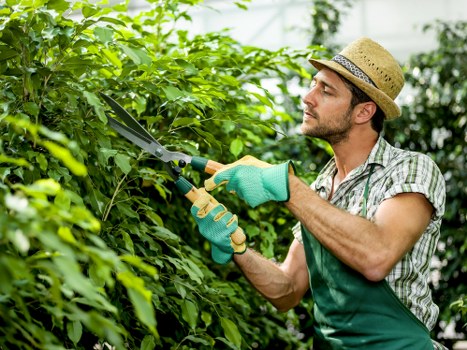
Green waste is one of the most common recycled materials in outdoor projects. Branches, hedge trimmings, grass cuttings, roots, and leaf litter can all be collected separately and processed into mulch, compost, or soil improver. This keeps organic material in circulation and helps reduce methane emissions associated with landfill. In many Landscaping Ealing jobs, green waste is also kept free from plastic ties, pots, and contaminated packaging so it remains suitable for high-quality composting. Where possible, topsoil removed during excavation is screened and reused on later jobs rather than being discarded.
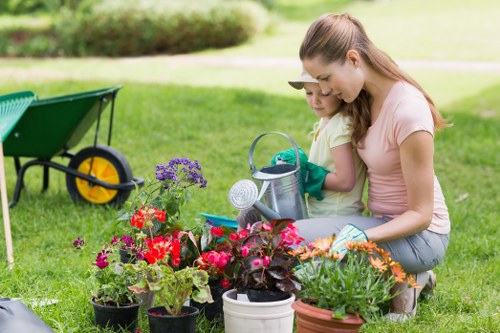 There is also a strong focus on materials that can be reused directly. Paving slabs, edging stones, sleepers, bricks, and timber often have a second life in other landscape projects if they are removed carefully. By identifying these items early, landscaping services in Ealing can minimise waste and reduce the demand for new raw materials. This approach saves energy across the supply chain and supports a more circular model of working. Even small changes, such as salvaging intact hardscape elements, can have a measurable impact when repeated across many projects.
Partnerships with charities add another layer to the sustainability work. Usable garden materials, planters, tools, outdoor furniture, and certain surplus materials can be passed on through local charitable networks rather than being thrown away. These partnerships help support community projects, training initiatives, and non-profit spaces that benefit from low-cost or donated items. In some cases, recovered timber or stone can help fundraise indirectly by being rehomed through charity reuse channels. For recycling-focused landscaping in Ealing, this creates a social benefit alongside the environmental one.
Operational sustainability also depends on transport. That is why low-carbon vans are increasingly important to landscaping fleets. Electric or hybrid vans reduce tailpipe emissions, improve air quality, and are better suited to short-distance, stop-start journeys common in urban work. For jobs across local streets and residential areas, low-carbon vans support cleaner logistics while still carrying tools, plants, and recycled materials. When combined with route planning and consolidated collections, they help lower the overall carbon footprint of Ealing landscaping operations.
 Another important area is responsible handling of construction-related waste that appears during hard landscaping. Concrete, broken bricks, ceramics, and stone can often be separated for aggregate recycling, while metal fixings and fittings are routed into metal recovery streams. Even packaging from supplies is treated carefully: cardboard is flattened, plastics are separated where possible, and contaminated sacks are kept out of clean recycling. This attention to detail reflects the borough’s broader approach to waste separation, where the quality of sorting matters as much as the quantity recycled.
Planting and maintenance work also contribute to a sustainable landscaping model. Old compost, mulch, and prunings can be transformed into useful soil-building material, while suitable bio-based products are chosen over less recyclable alternatives. In addition, careful procurement helps reduce waste before it starts: buying only what is needed, selecting products with recyclable packaging, and favouring durable materials over disposable ones. These decisions support a more circular system and reduce the pressure on local waste infrastructure. For those seeking Landscaping Ealing services, sustainability is increasingly part of quality workmanship.
 The future of recycling in landscaping depends on consistency, accountability, and smarter resource use. By setting a clear recycling percentage target, using local transfer stations, supporting charities, and operating low-carbon vans, Landscaping Ealing demonstrates that outdoor improvements can be delivered with a lighter environmental footprint. When combined with careful sorting, reuse of suitable materials, and attention to borough-wide waste separation habits, these actions help create greener spaces and a cleaner local environment. In practical terms, sustainable landscaping is not an extra step; it is becoming the standard.